
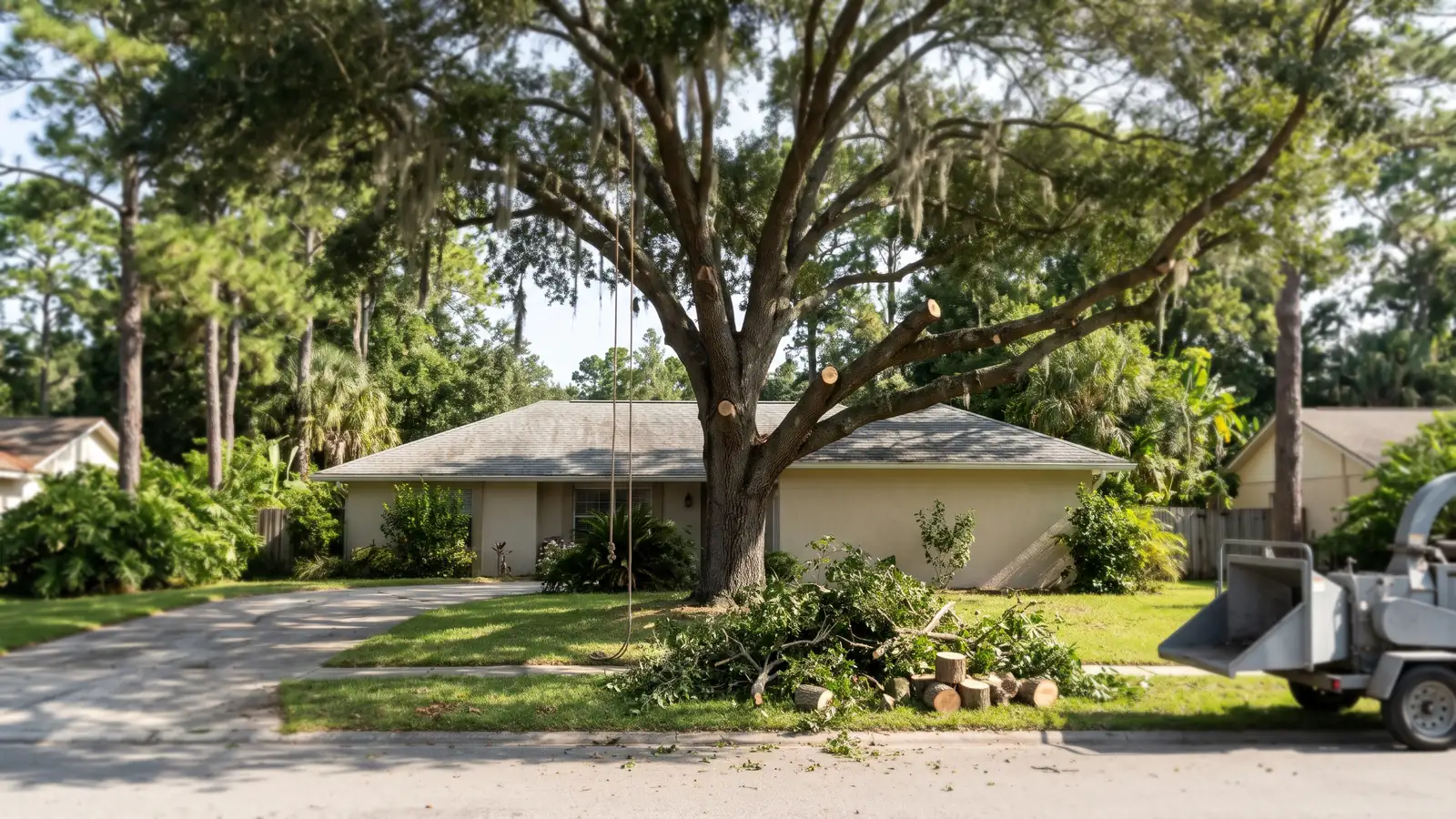
Tree Cabling and Bracing for Weak Forks
Cabling and bracing hold a defect together so a tree you want to keep can stay. UF/IFAS describes it as specialist work for arborists with the training and equipment to do it.
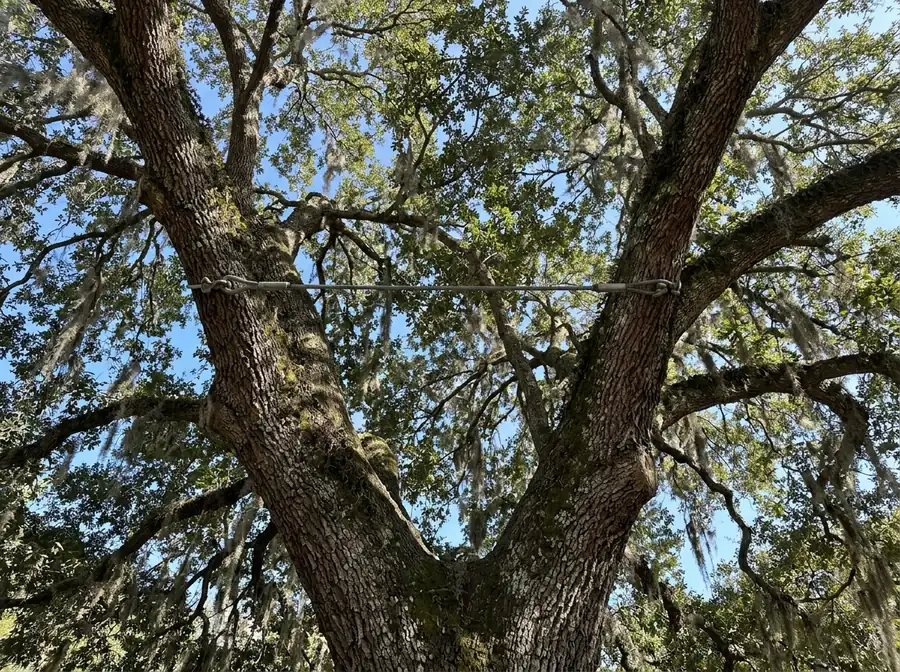
Cables Linking Two Upright Trunks
A cable ties two stems together high in the crown so a gust can't pull them apart at the fork. UF/IFAS places it about two-thirds of the way up from the weak union. A cable doesn't repair the fork itself. UF/IFAS says a cabled tree should be inspected at regular intervals and the system adjusted when needed.
- Typical placement: about two-thirds of the way from the union to the top
- HomeGuide's national range: $200 to $350 per tree
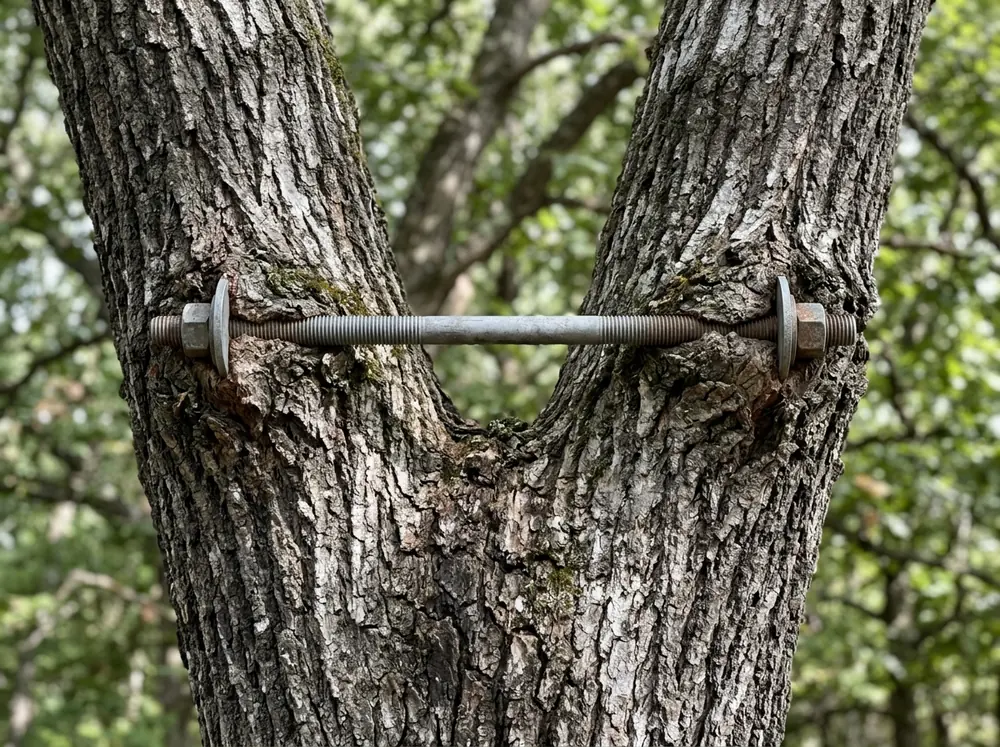
Brace Rods Through a Weak Union
A brace rod goes through both stems close to or in the union itself, which helps keep the two trunks from separating where the split would start. UF/IFAS describes both kinds of hardware for trees with bark inclusions: the rod close to the union, the cable higher in the crown. Ask the arborist to explain which one your fork needs, and why.
- Rods go in close to or at the union; cables go higher
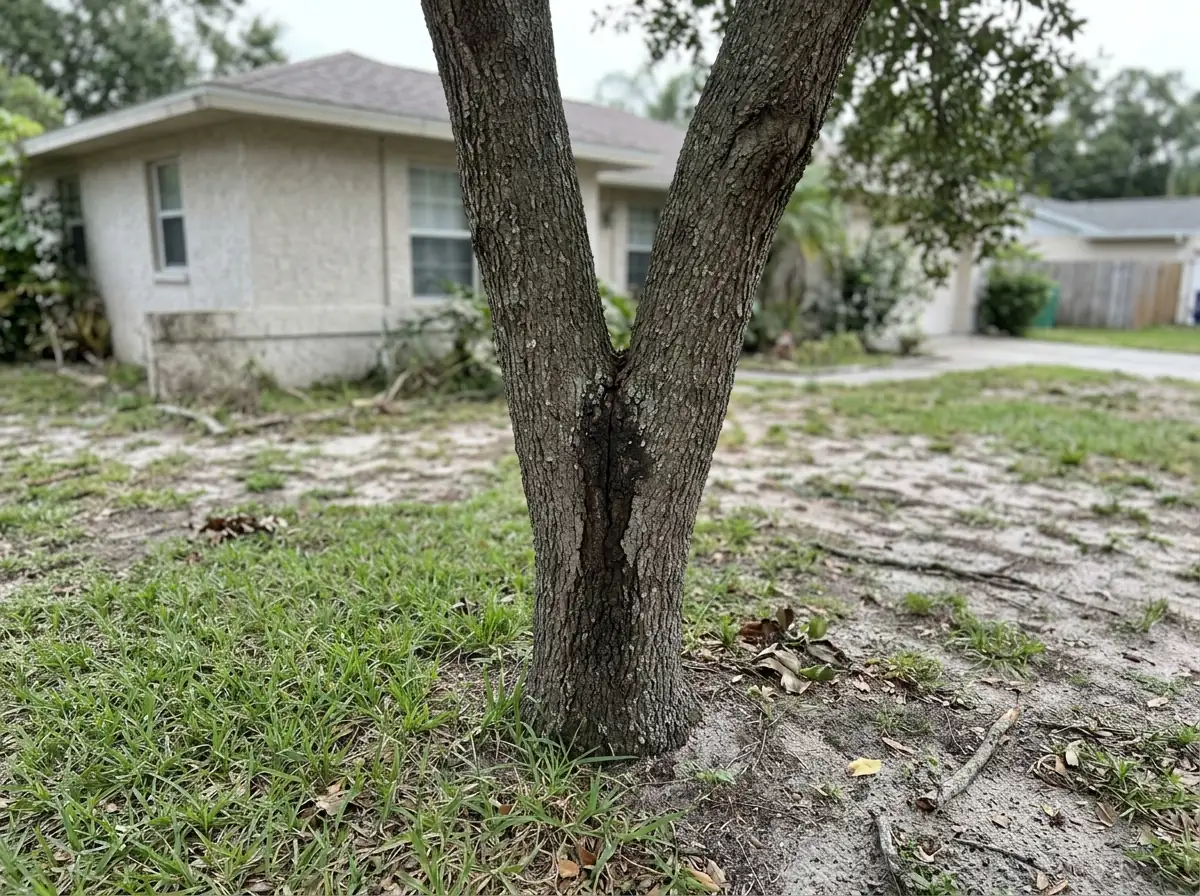
Forks with Included Bark
Included bark is a seam of bark trapped inside a tight fork, and UF/IFAS calls a union like that weak. Live oaks are prone to forks: left alone, UF/IFAS says, a live oak becomes multi-trunked with many winding branches. A cable is one of four answers it lists. The others are taking one stem out, removing side branches near the end of one stem to lighten it, or shortening it with a reduction cut. On a young tree, pruning branches that form a narrow angle with the trunk avoids the problem before it starts, which is why UF/IFAS advises pruning young live oaks every year for their first five years (young-oak pruning).
- Narrow-angle branches are the ones most likely to split as a tree ages
Why Palm Coast homeowners, HOAs and property managers call Palm Coast Tree Service
- Each request goes to just one tree company
- Free to use; you pay only for work you sign off on
- Ask for an estimate that lists cleanup and hauling
- Ask to see liability and workers' comp proof
Cabling, Reducing or Removing: What to Weigh
UF/IFAS says reducing the canopy, or part of it, should be considered whenever a support system goes in, and that pruning should come right before the hardware. So a cabling estimate often has two lines: the cable or rod, and a reduction of the heavier stems. Ask for each one priced on its own line.
Keep and support
A sound tree with one weak fork over a lawn or patio.Reduce first
A long, heavy stem over the roof or the screen enclosure (crown reduction).Remove
A union that has already split, or a tree you aren't sure about. Get an arborist's risk assessment before you decide; a removal of this size usually needs a City permit (permit rules).
Ask who will do the follow-up checks and how they are billed. For how different species stand up to hurricanes, see hurricane tree trimming.