Crown Thinning, Cleaning, Raising and Reduction
Each of the four cuts below answers a different problem, and a good estimate names which one is being done and why.
Crown Cleaning: Dead, Broken and Rubbing Branches
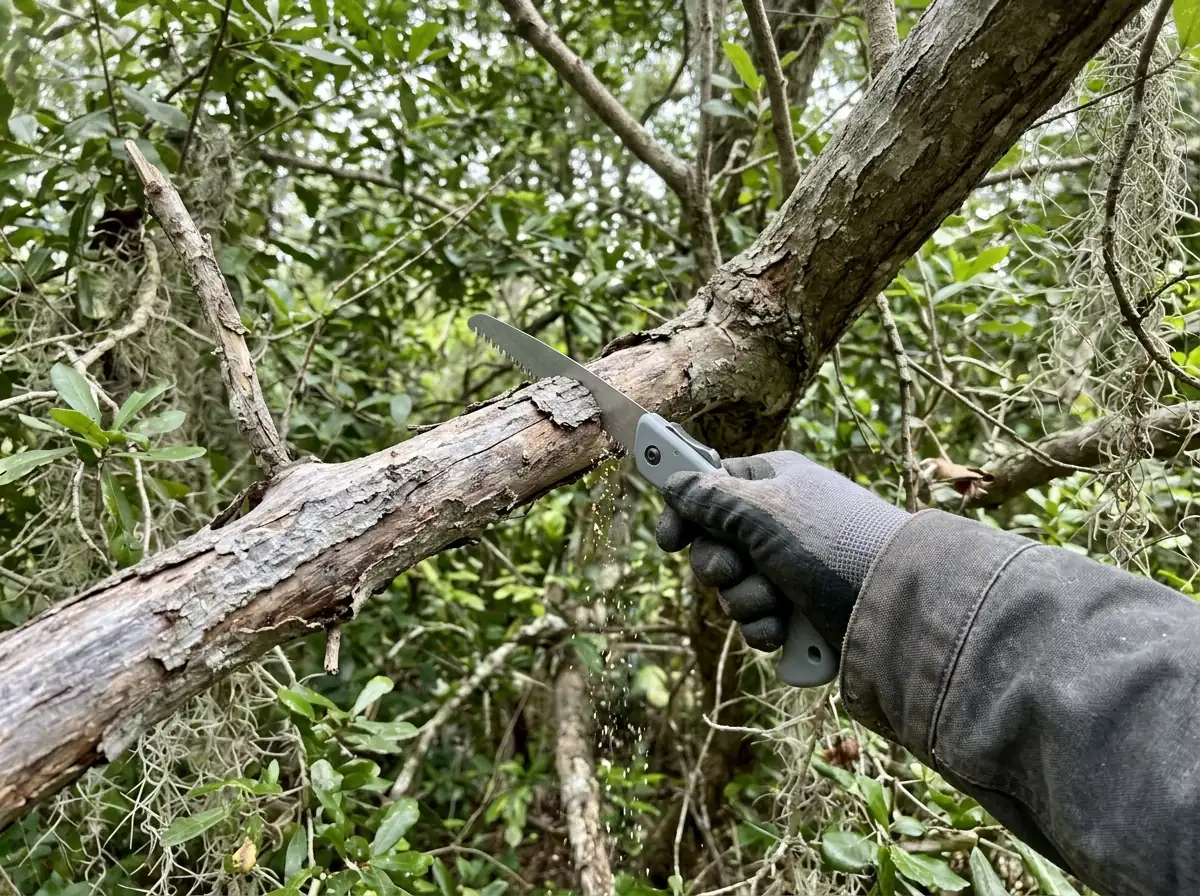
Cleaning removes dead, detached, diseased, infested and damaged branches and nothing else. It suits trees of any age but is most common on medium-aged and mature ones. UF/IFAS notes that taking live branches out of a mature tree is often unnecessary and can even harm it, so on an old shade tree, cleaning alone may be the whole job.
- Cut just outside the swollen collar at the base of a dead branch, never into it
- Where two branches rub, remove or shorten one of them
- Dead branches are entry points for infection and are weakly attached
Crown Thinning for Wind and Light
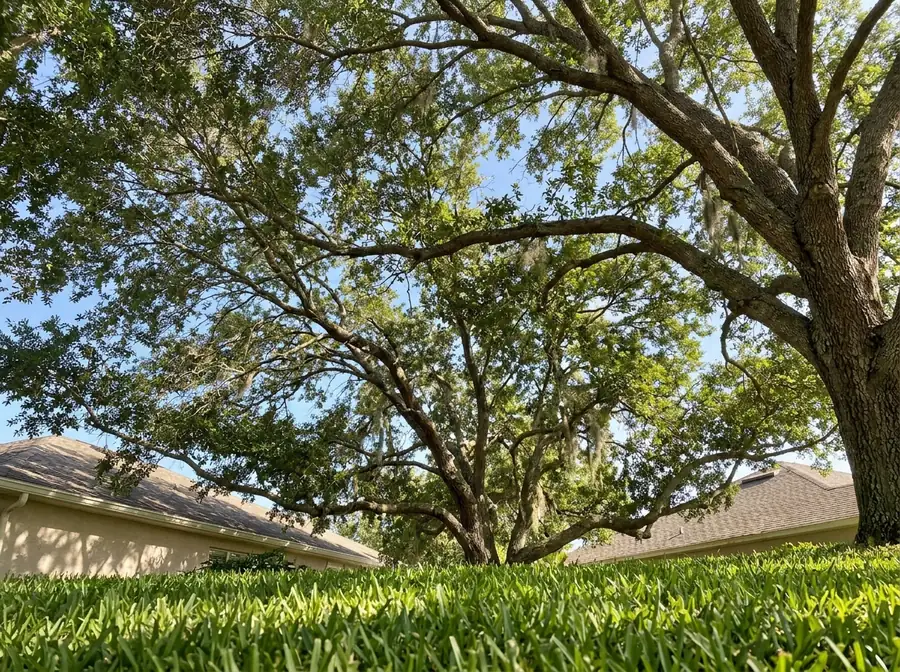
Thinning lowers the density of live branches, so light and air move through the crown and the limbs carry less weight. UF/IFAS points to trees whose roots are hemmed in by curbs, streets, sidewalks and buildings, and trees in open, windy spots, as the best candidates. A flush of water sprouts on the inner limbs afterward is a sign the crown was over-thinned.
- In the 120 mph test, thinned trees' upper trunks bent 23 degrees against 46 for unpruned trees
- Proper thinning keeps the crown's shape and size
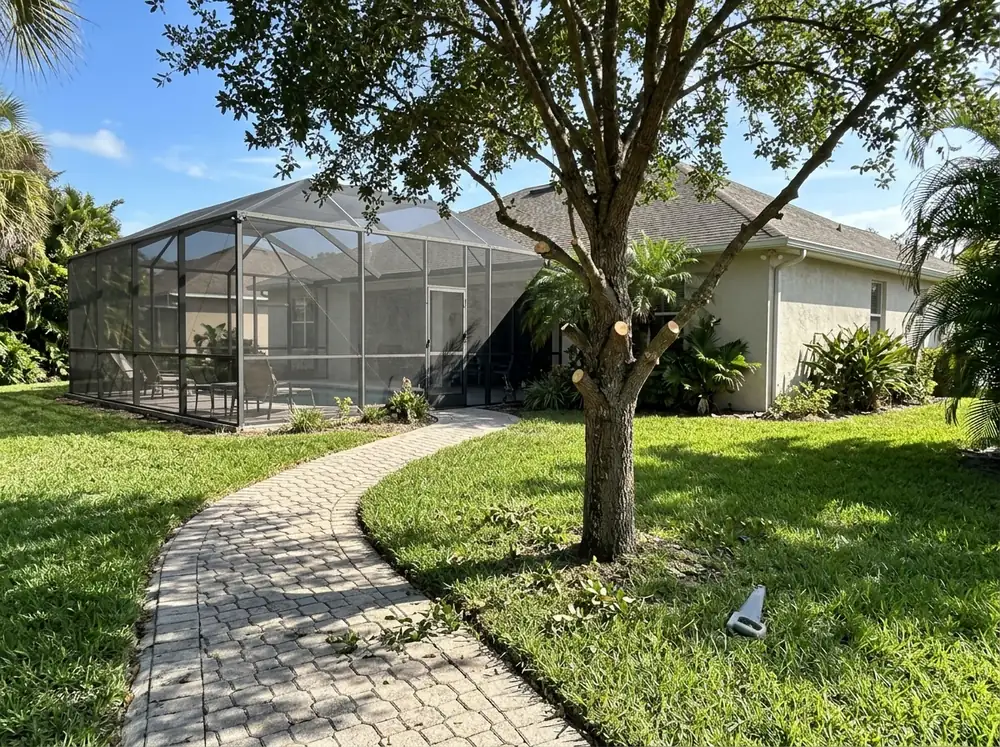
Crown Raising for Walkways, Drives and Pool Cages
Raising clears space under the tree for people, cars and screen enclosures. UF/IFAS says it works best on young and medium-aged trees: the low branches are shortened regularly so they stay thin, then removed later once they are small, which leaves smaller wounds than sawing off a thick limb.
- In the wind test, raised trees' upper trunks moved no differently, statistically, from unpruned ones, so raising is for clearance, not storm prep
- Keep the live crown at least two-thirds of the tree's height
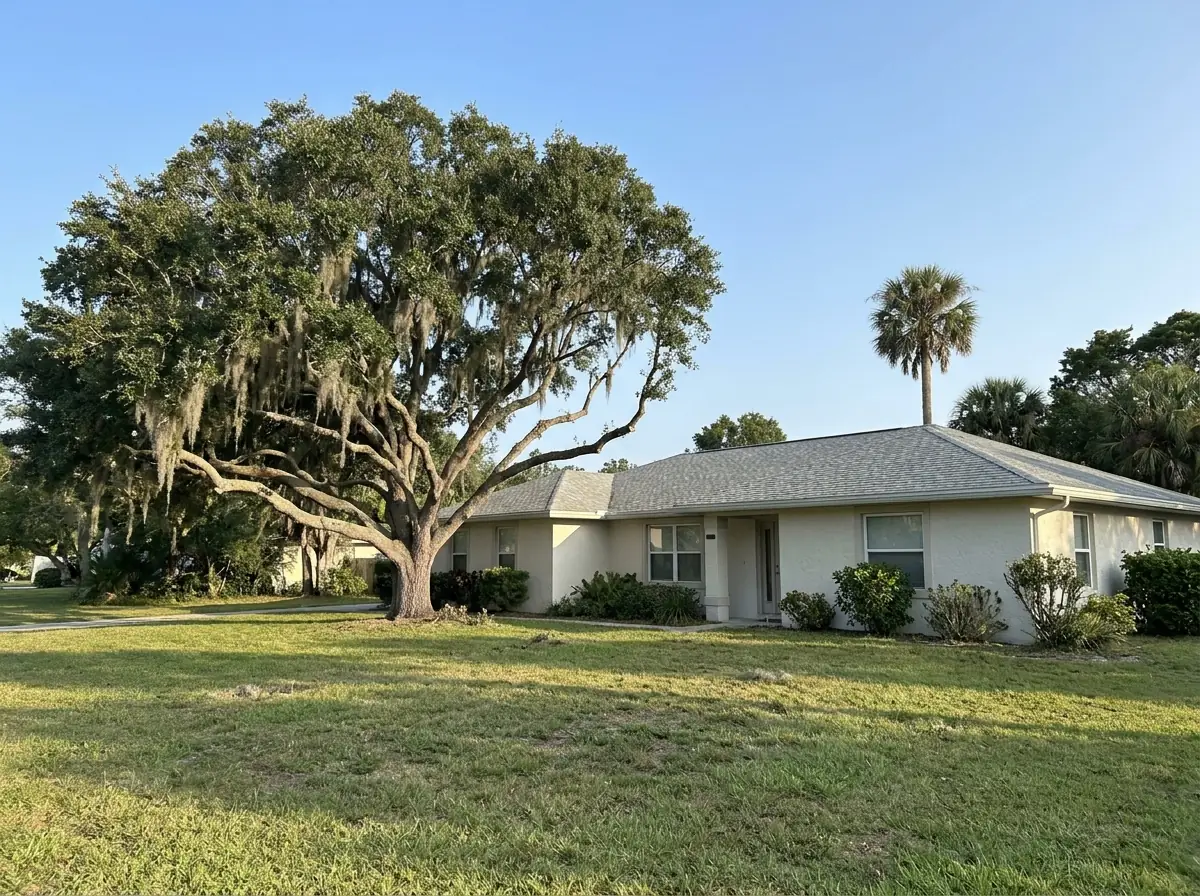
Crown Reduction over Roofs and Lines
Reduction makes the tree smaller by cutting stems back to side branches, not by stubbing them off. UF/IFAS gives two reasons to do it: lowering the risk of failure and keeping limbs clear of a structure. Storms often break or overturn the largest trees on a lot, and reducing them is one way to keep them. Near power lines, the job goes to line-clearance workers.
- Cut back to a side branch at least one-third the diameter of the part removed
- Once reduced, a tree has to be kept that size with repeat pruning
- Reduce before the tree outgrows the space, while the cuts are still small
Why Palm Coast homeowners, HOAs and property managers call Palm Coast Tree Service
- Each request goes to just one tree company
- Free to use; you pay only for work you sign off on
- Ask for an estimate that lists cleanup and hauling
- Ask to see liability and workers' comp proof
Cuts to Refuse, and Where the City's Permit Rule Starts
Two cuts to refuse are topping and lion-tailing. UF/IFAS warns that topping leads to decay, sprouts, cracked limbs and root decline, and Palm Coast counts both cuts as damage to the tree. Ordinary pruning to the ANSI A300 standard isn't treated as a removal, but pruning that destroys a tree or "effectively removes" it falls under the City's permit rule (the city's pruning rule). A removal is covered on the permit rules page. For oaks in particular, see oak tree trimming.