
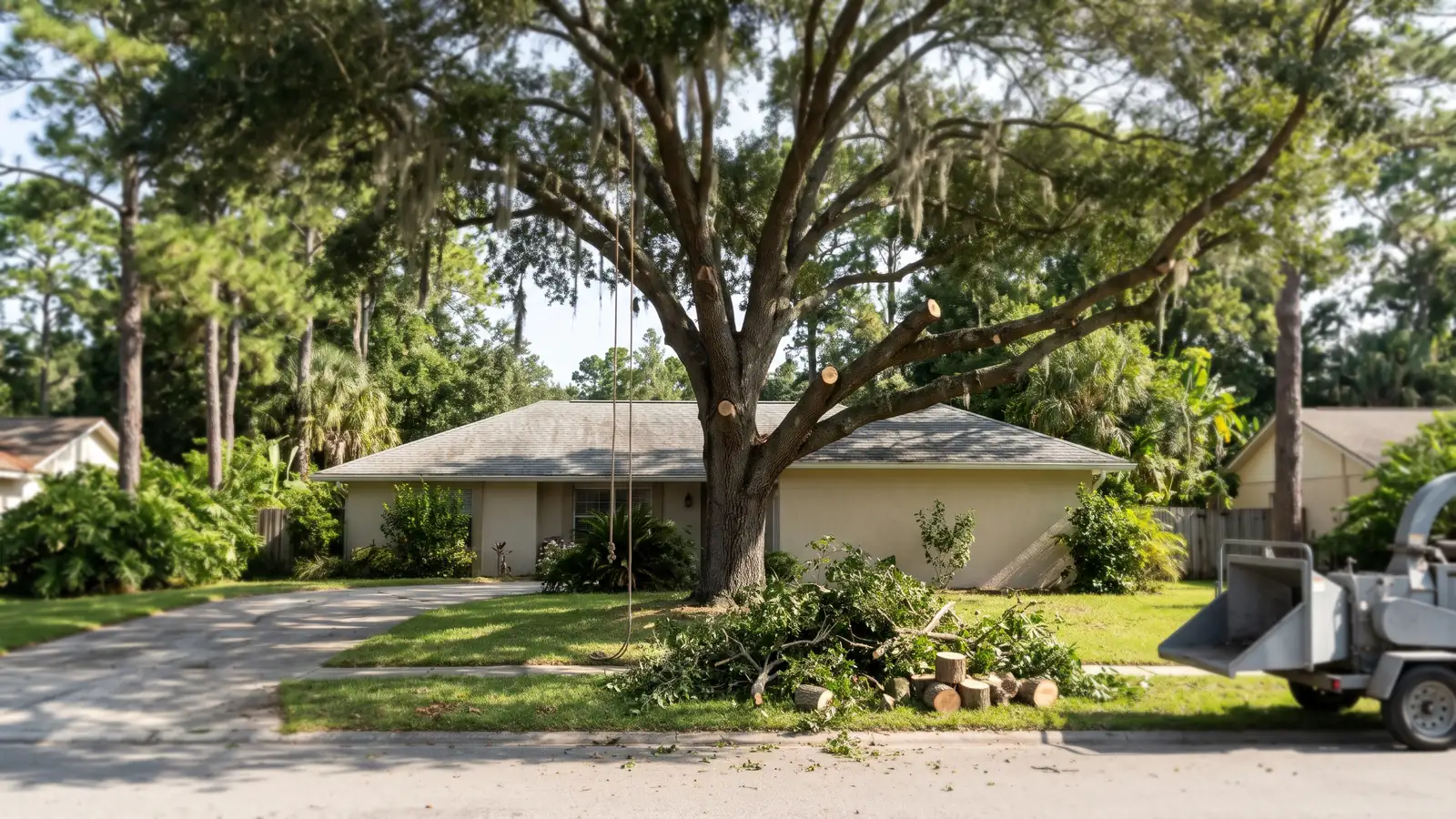
Tree Trimming Near Power Lines, Owner Side and Utility Side
FPL serves Palm Coast from a service center it opened in the city in 2017; its summary for Flagler County that year listed inspections of 34,226 power poles in the county. Who trims a tree depends on which line it threatens and whether FPL has marked it.
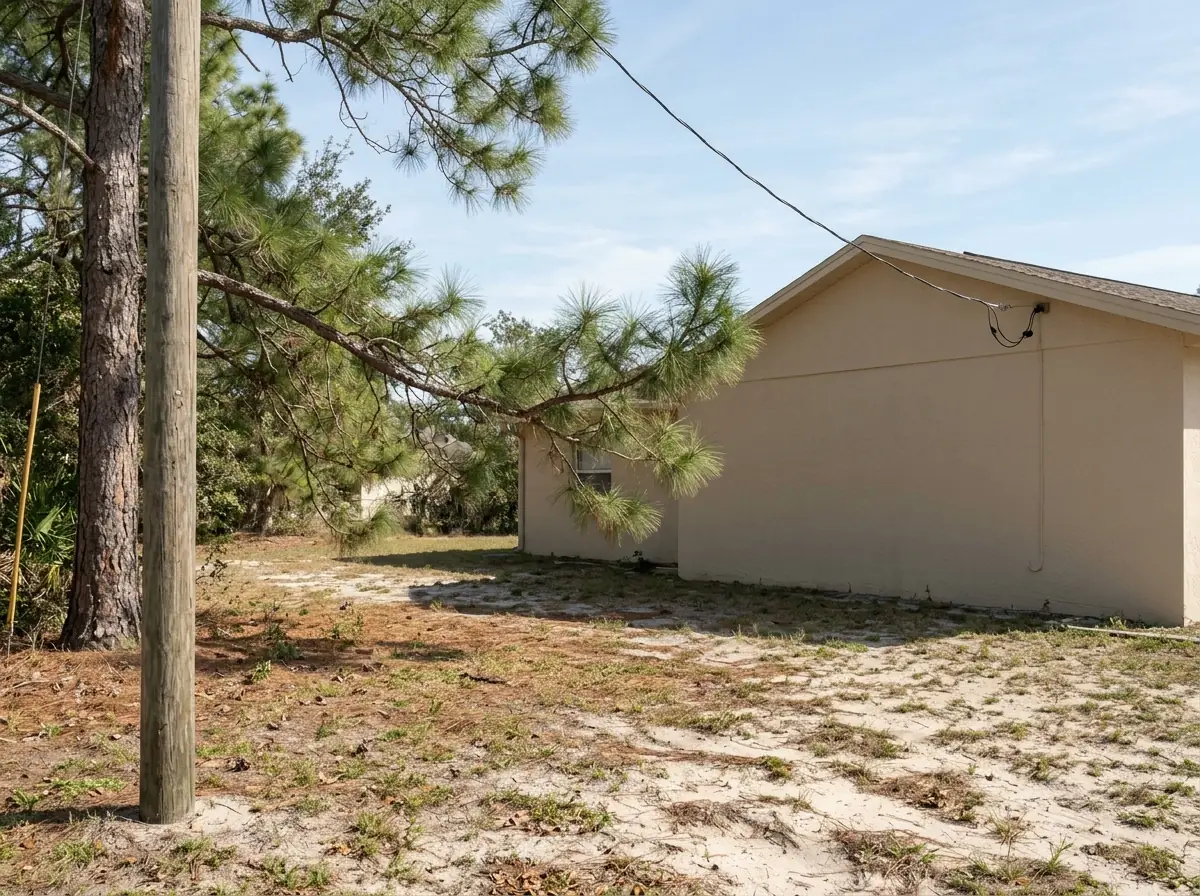
Limbs Close to the Wire Running to the House
FPL won't trim every tree. Trees within 10 feet of a power line that FPL leaves alone are the customer's to have trimmed by a qualified tree trimmer. FPL is blunt about the rest: never try to trim anything growing near or on an overhead line yourself, and leave the work around energized wires to specially trained line-clearing professionals.
- Owner's responsibility: trees within 10 feet of a line that FPL doesn't trim
- UF/IFAS: no pruning within 10 feet of a conductor without electrical hazard training
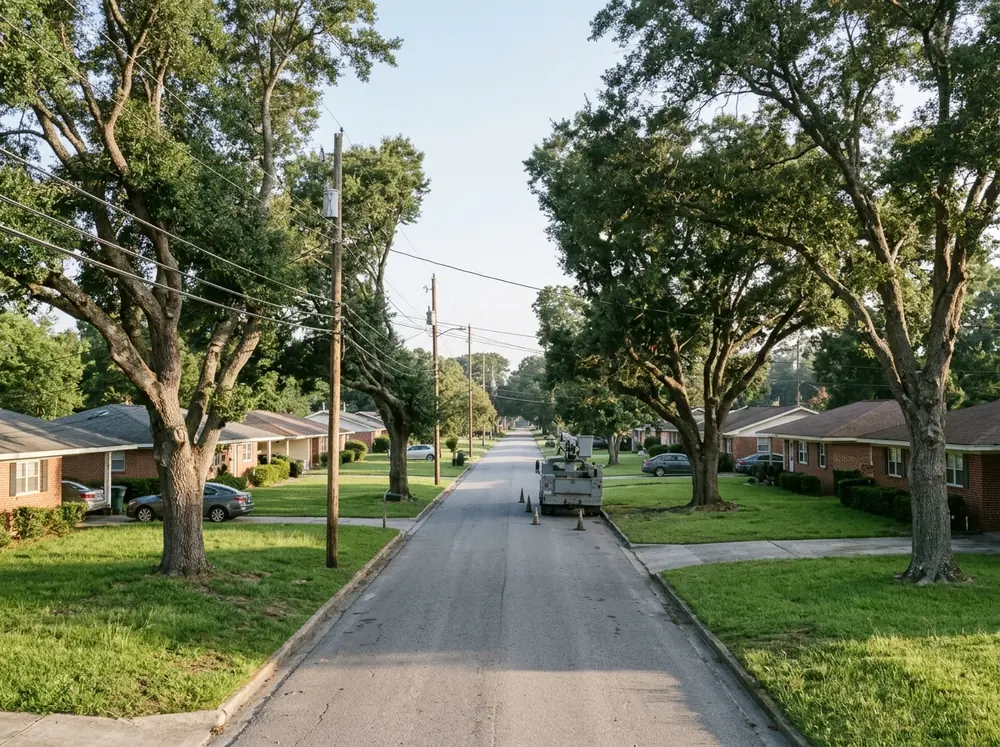
Street and Easement Lines on FPL's Trimming Cycle
Along its own lines, FPL trims on a planned cycle. Its contractors use directional pruning, removing whole branches back toward the trunk so regrowth heads away from the wires. UF/IFAS notes owners sometimes think utility pruning is too severe, but the contractor is usually following the utility's specifications, which should follow ANSI pruning standards and ISA best practices. When FPL can't prune a tree without wrecking its shape or health, it removes it after telling the owner, with fast-growing, exotic and unhealthy trees the likeliest to go.
- Outside the cycle, FPL leaves an inspection notice card with a scheduled work date
- In 2017, FPL said it was trimming vegetation along Flagler County lines at a mile a day
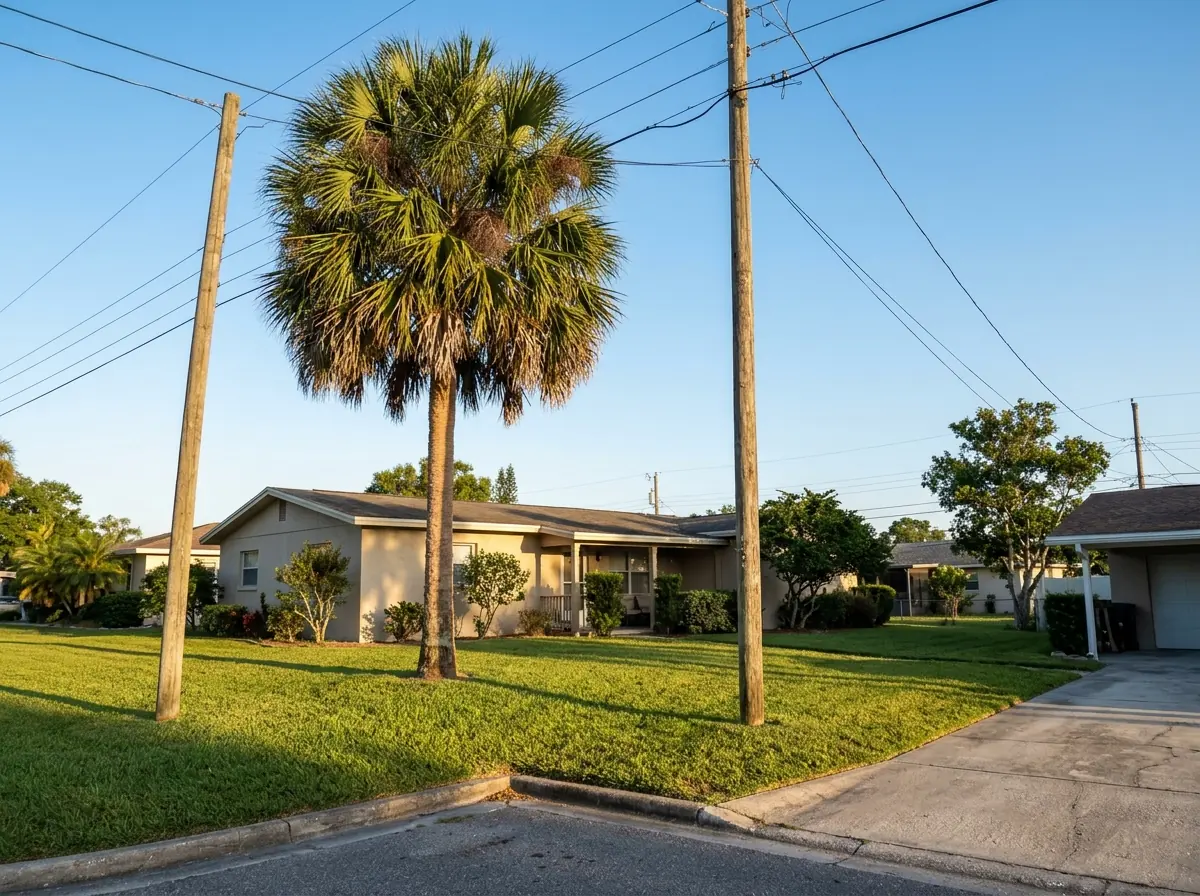
Palms Growing Toward the Wires
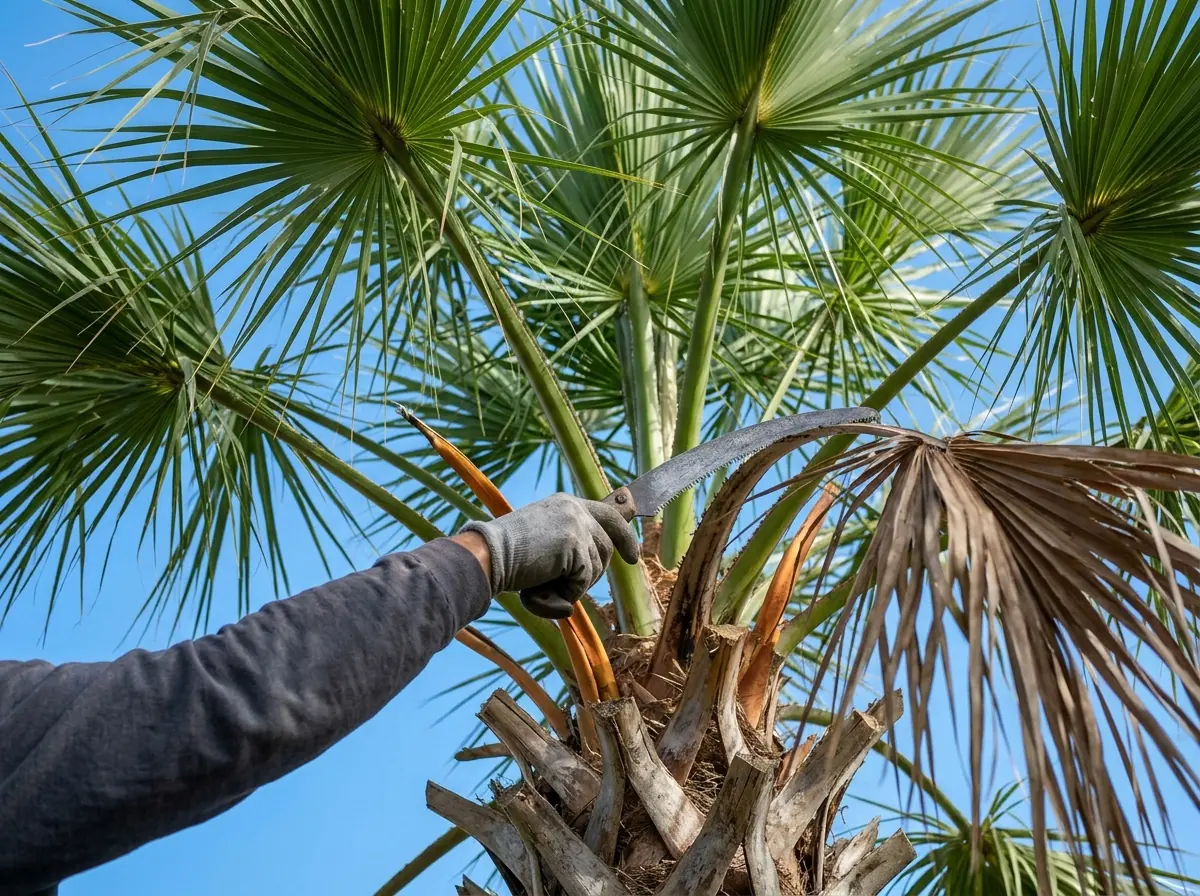
FPL names palm fronds alongside trees and limbs as things that can fall into overhead lines, and says qualified line-clearing professionals can trim to lower that risk. A palm whose crown has reached the wires is line-clearance work, not a routine frond trim. Away from the wires, a palm gets the same light trim as any other (palm trimming rules).
Planting Clear of the Lines
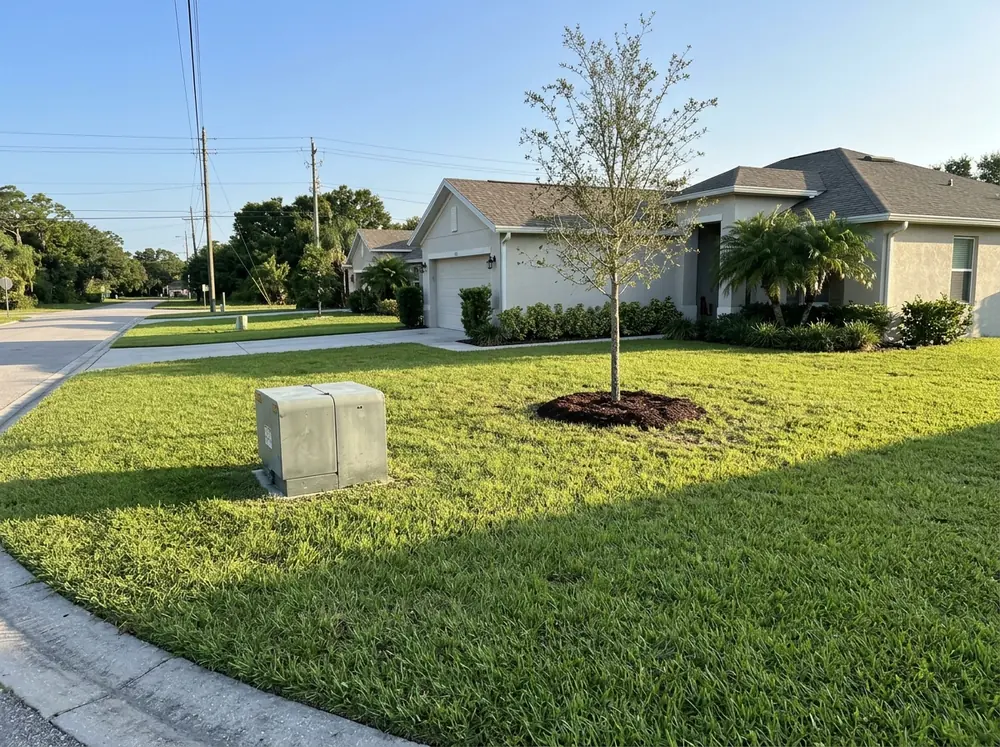
FPL's Right Tree, Right Place advice starts before the hole is dug: find out how tall, wide and deep the tree will be at maturity, look up and note where the lines run, and use the setback diagram on FPL's tree location page. FPL also asks owners to keep trees, hedges and other deep-rooted plants away from the transformer box. Call 811 before digging (how 811 works), and see tree planting for species and spacing.
- Transformer clear zone: 8 feet in front, 3 feet at the back and sides
Why Palm Coast homeowners, HOAs and property managers call Palm Coast Tree Service
- Each request goes to just one tree company
- Free to use; you pay only for work you sign off on
- Ask for an estimate that lists cleanup and hauling
- Ask to see liability and workers' comp proof
Before Work Near a Line Starts
If a branch is already touching a wire, stay well back and report it to FPL rather than calling a regular trimming crew; FPL's tree pages invite customers to report a tree or vine condition. A tree that has fallen onto lines is an emergency (what to do).
Ask the contractor whether the climber has electrical hazard or line-clearance training, how the limbs will be lowered away from the wire, and whether the estimate covers hauling.