
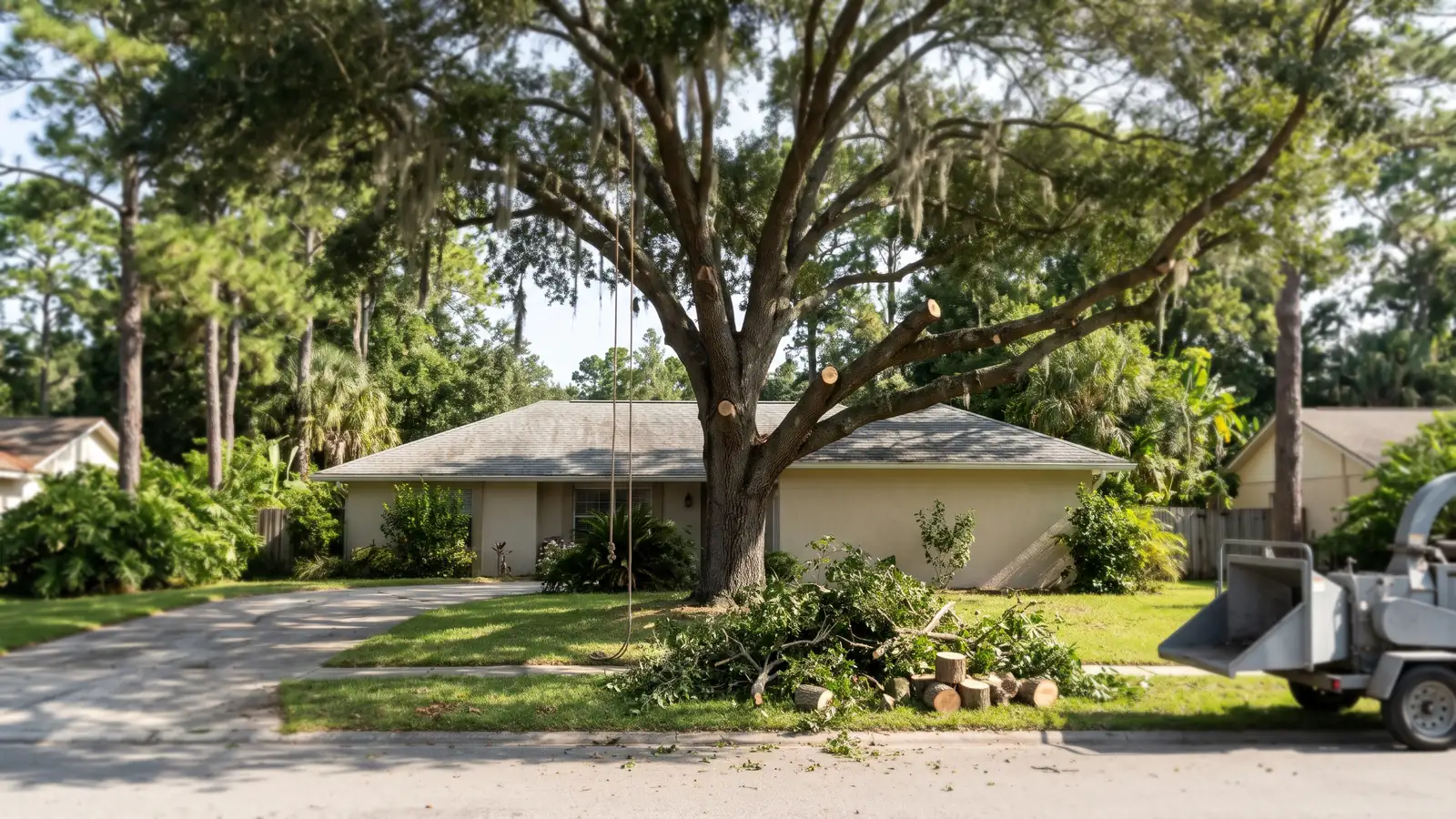
Hurricane Tree Trimming, Tree by Tree
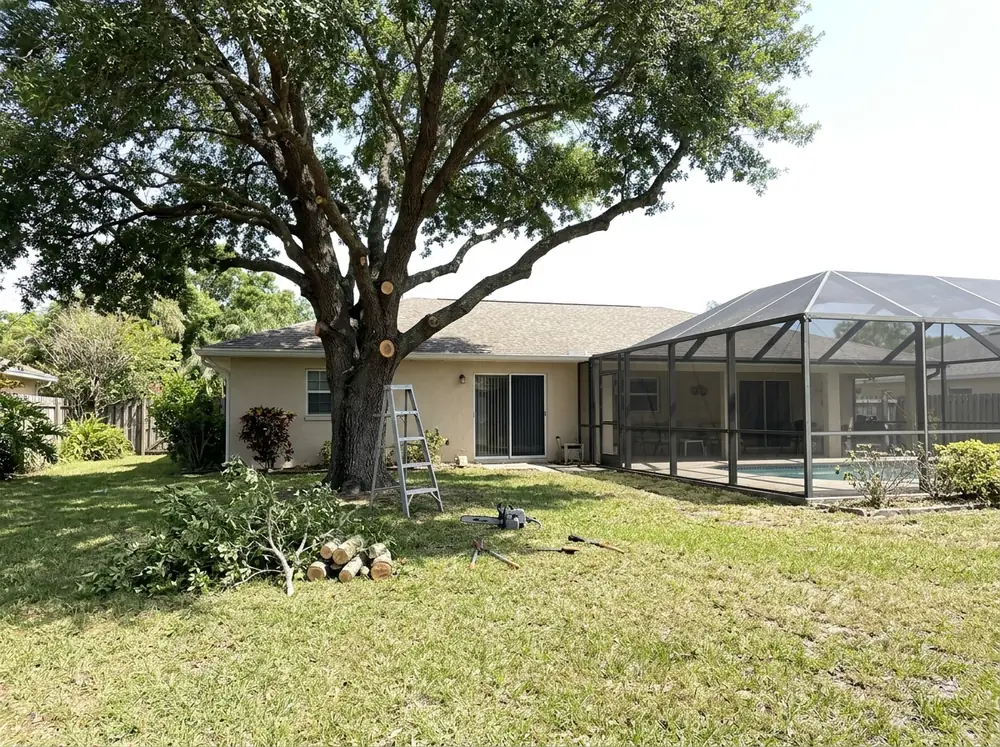
Clearance Cuts Over Shingles and Screen Enclosures
Limbs that rub the roof or rest over a screen enclosure are the ones that do damage when the wind picks up. UF/IFAS directs growth away from a building by shortening or removing the limbs on that side, and notes that reducing the biggest trees on a lot is a way to keep them, since storms tend to break or overturn the largest ones first. In its wind trials, reduced crowns bent the least.
- Write the clearance into the estimate in feet: from the roof edge, the screen and the gutters
- Clearance is not permanent; the limbs grow back and need repeat cuts
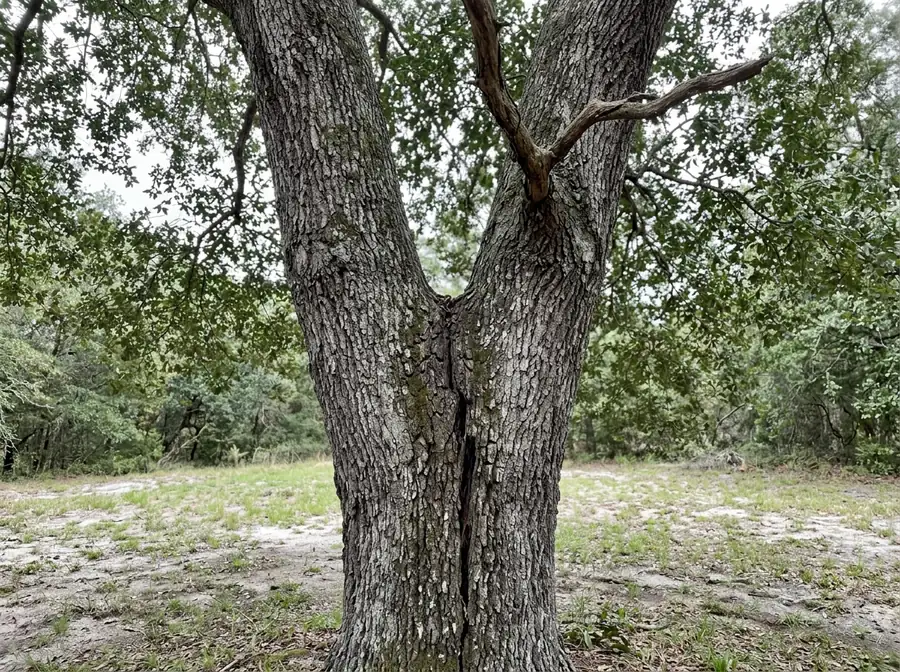
Cracked Unions and Dead Limbs
Dead branches are weakly attached and come down first. A crown cleaning takes them out along with cracked and broken wood. Where two trunks meet with bark pinched between them, UF/IFAS lists four fixes: remove one stem, lighten its end, shorten it, or install a cable. Even live oaks lost a significant share of their branches in the storms UF/IFAS studied, so sound species still need a look.
- Ask for a note on any union that needs a second opinion
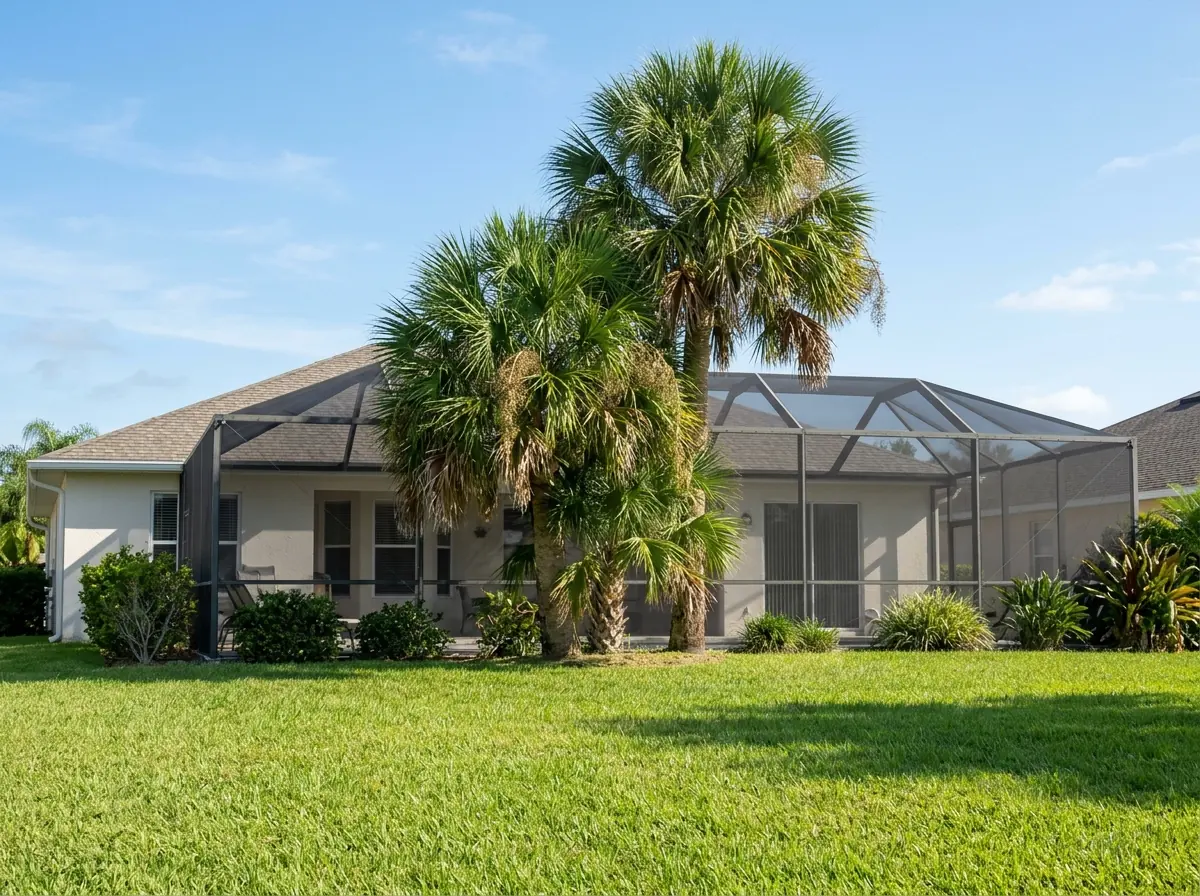
Palms in the Storm-Prep Visit
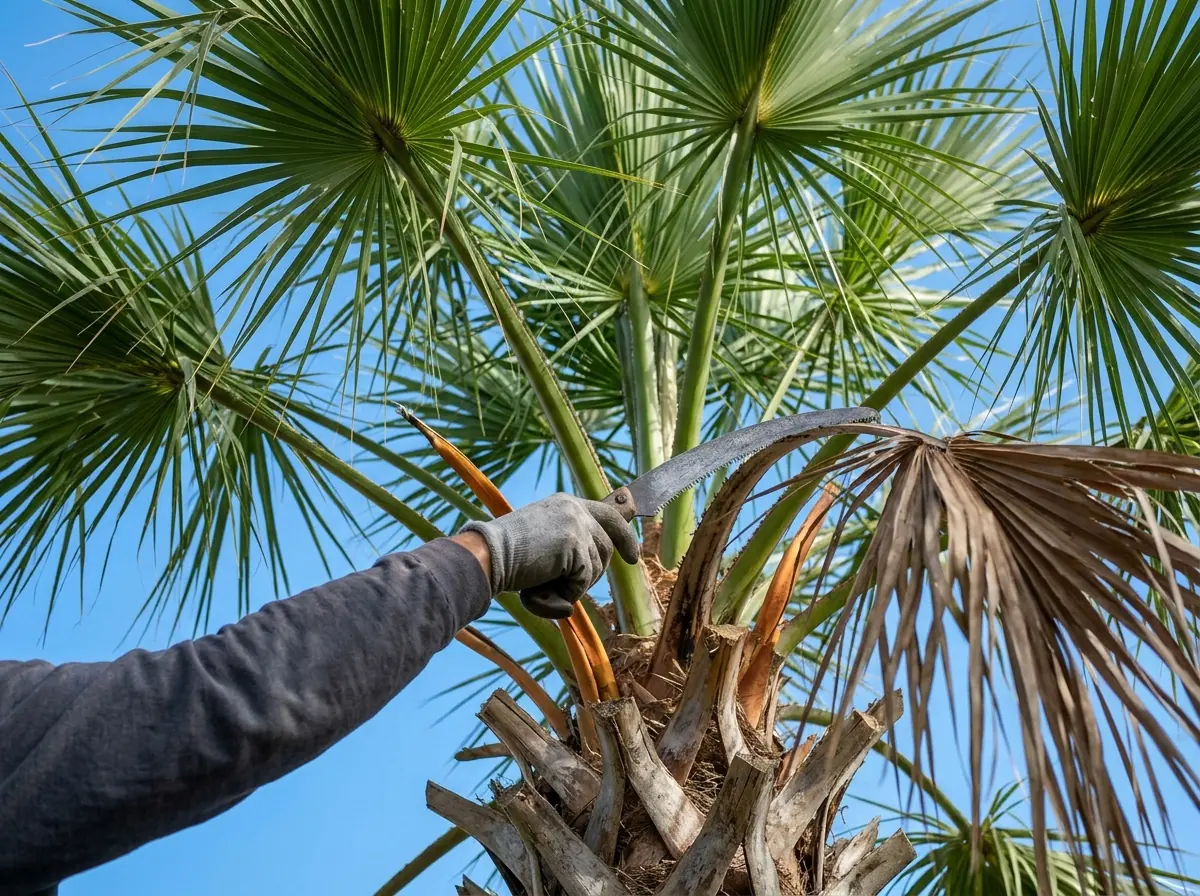
Palms belong on the same visit, but the work is small: only dead fronds and flower or fruit stalks come off. The green crown stays full, because UF/IFAS found that palms stripped to a narrow tuft lost their heads more often in storms (palm trimming rules).
Wind-Firm Trees to Keep, Weaker Ones to Watch
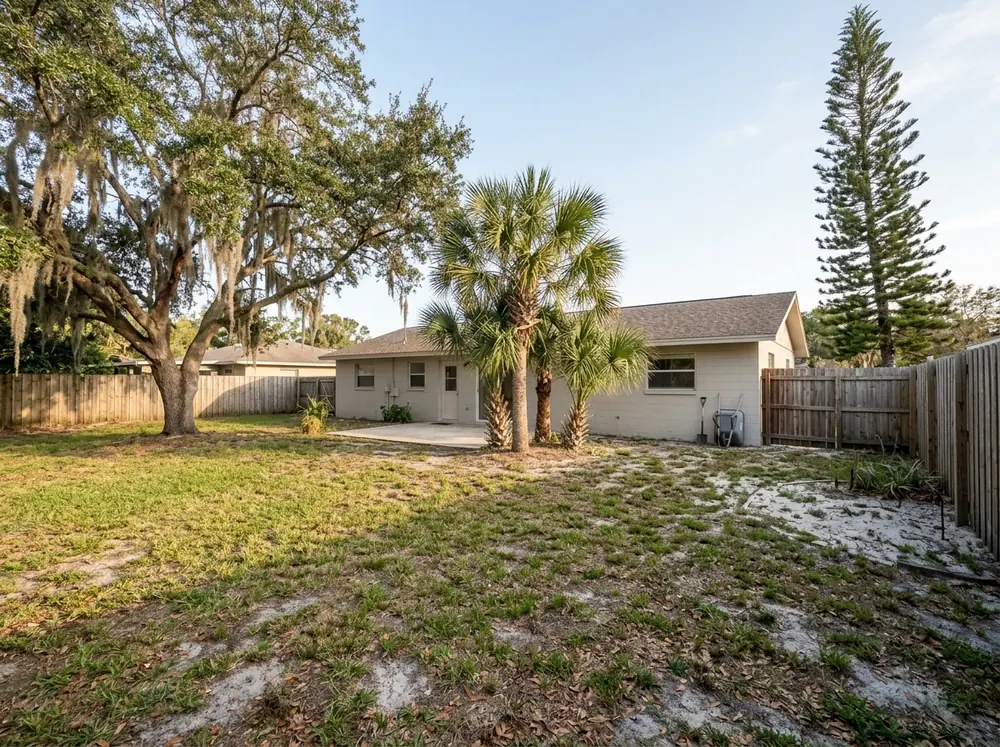
UF/IFAS studied which trees were still standing after Florida hurricanes. Live oak, sand live oak, sabal palm, southern magnolia and dogwood were among the best survivors, and sabal palm, southern magnolia and American holly survived while keeping most of their leaves, losing 27% to 43%. Sand pine and southern red cedar did poorly in study after study. Laurel oak and the pines are covered on the oak removal and pine removal pages. UF/IFAS is careful to add that no species is completely windproof, and that soil, age and health matter as much as the name on the tree.
Why Palm Coast homeowners, HOAs and property managers call Palm Coast Tree Service
- Each request goes to just one tree company
- Free to use; you pay only for work you sign off on
- Ask for an estimate that lists cleanup and hauling
- Ask to see liability and workers' comp proof
Hurricane Season Dates and When to Book
NOAA's National Hurricane Center puts most of the season's activity between mid-August and mid-October, and HomeGuide notes that demand for tree work runs highest from late spring through early fall and that winter bookings may bring lower rates. That makes winter and early spring the window for planned pruning.
FPL asks owners not to wait for a hurricane before trimming near lines, because cut debris can become dangerous in storm winds; the same logic applies to any pile left in the yard. Trees near wires go to line-clearance specialists. If a tree is already down, see emergency tree removal.