
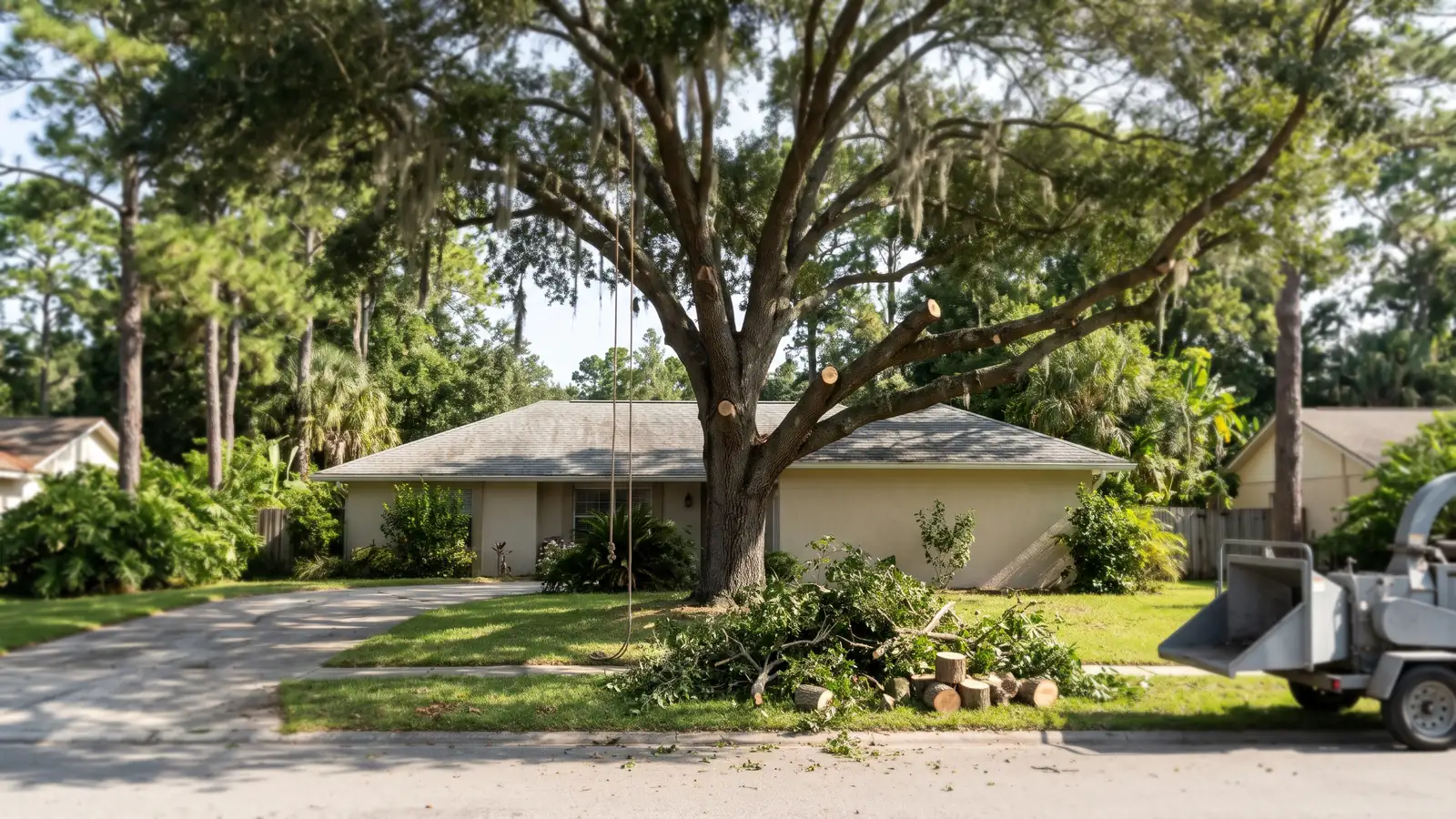
Oak Tree Trimming by Species and Job
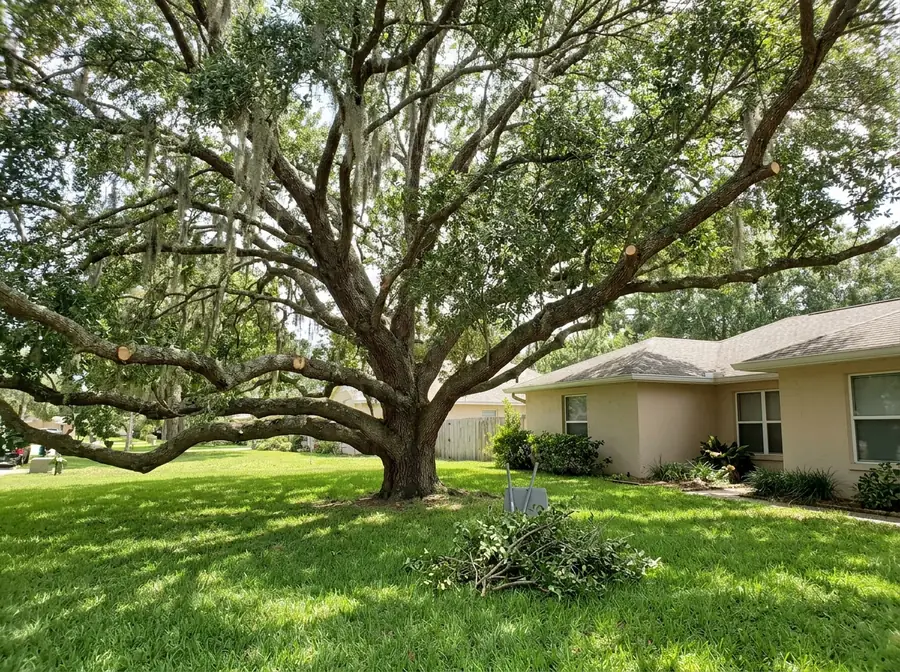
Live Oak Crown Thinning
Thinning takes small branches out of the outer half of the crown so wind passes through it instead of pushing against it. UF/IFAS describes thinned trees as moving less in storms, though the effect fades as the oak grows back. The branches stay small and the inside of the crown is left alone: stripping the interior is lion-tailing, which Palm Coast's pruning rules treat as damage.
- Branches removed: usually 1 to 3 inches across, from the middle and outer canopy
- Live foliage taken per visit: about 15 to 20% at most on a large oak; 5 to 10% is often enough
- A well-thinned oak may not look pruned at all
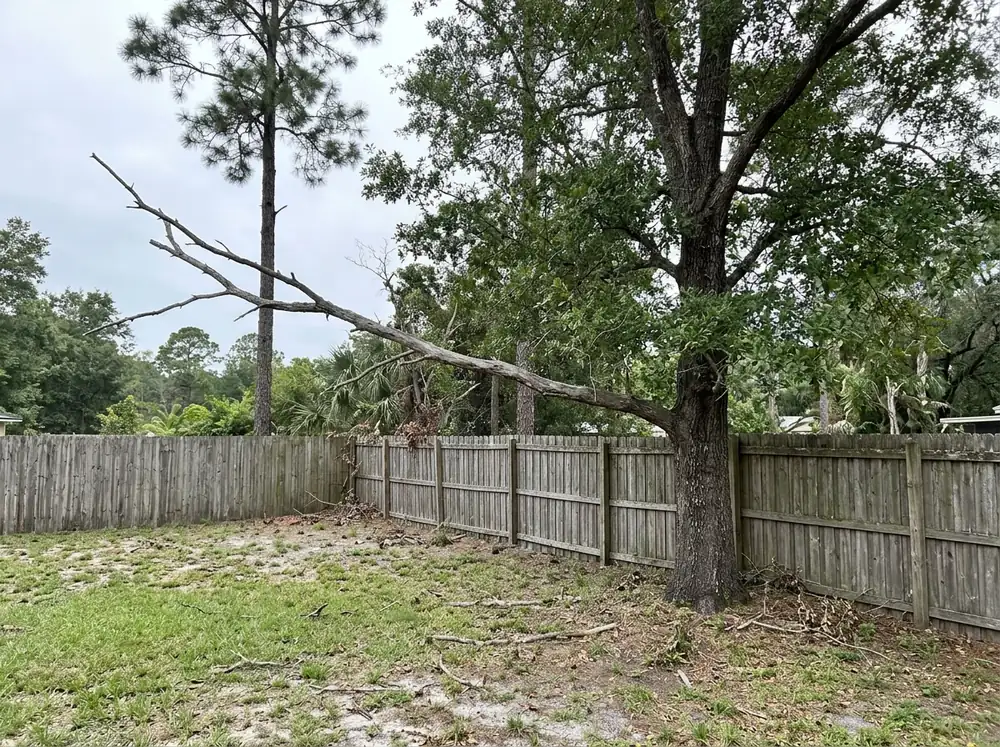
Laurel Oak Cleanup and Limb Shortening
Laurel oak is the oak to watch, because it stands up to storms less well than live oak. Trimming one usually means two jobs: a crown cleaning that removes dead, cracked and rubbing branches, and reduction cuts that shorten over-long limbs back to a side branch. UF/IFAS adds that a limb with bark pinched into its union can be shortened or lightened at the tip, or held with a cable.
- Dead branches to remove first: anything over about 1 inch across
- Reduction cut: to a lateral branch no thinner than a third of the stem being taken off
- Dead and broken wood can come out at any time of year
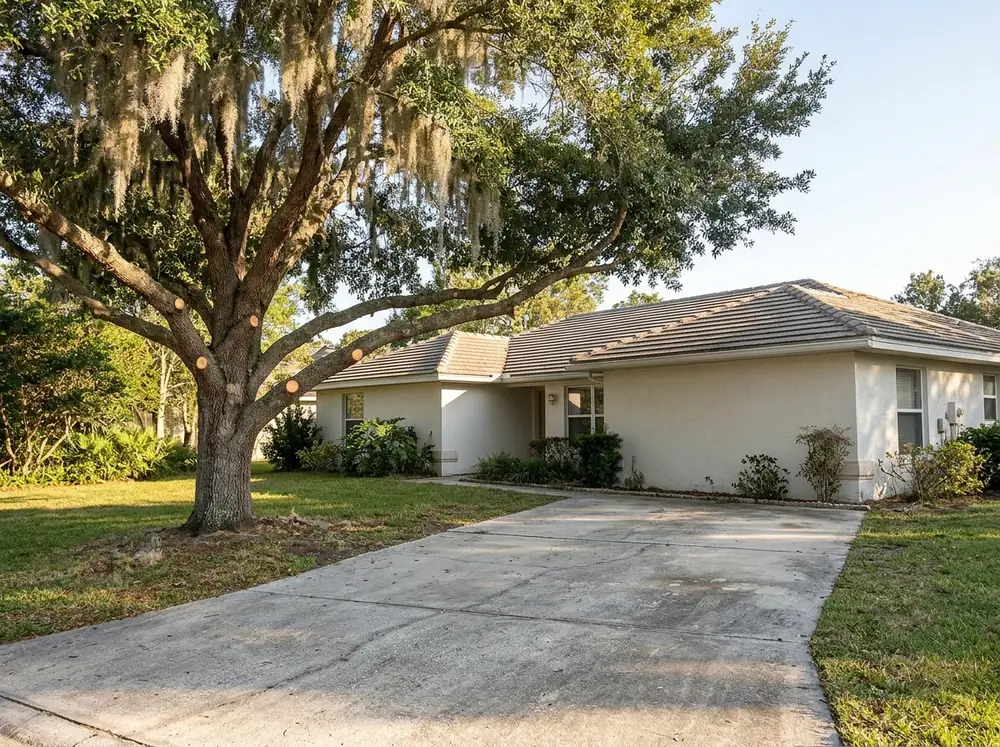
Raising Oak Limbs over Roofs and Driveways
Raising gives clearance under the canopy. UF/IFAS prefers shortening low limbs over several visits to sawing three big ones off the trunk at once, which leaves large wounds that can start decay and puts too much weight at the top. Clearance over a roof is better handled by reducing the limbs on that side.
- Keep the live crown at least two-thirds of the tree's height
- HomeGuide prices single branch removal at $75 to $250 a branch
Structural Pruning for Young Oaks
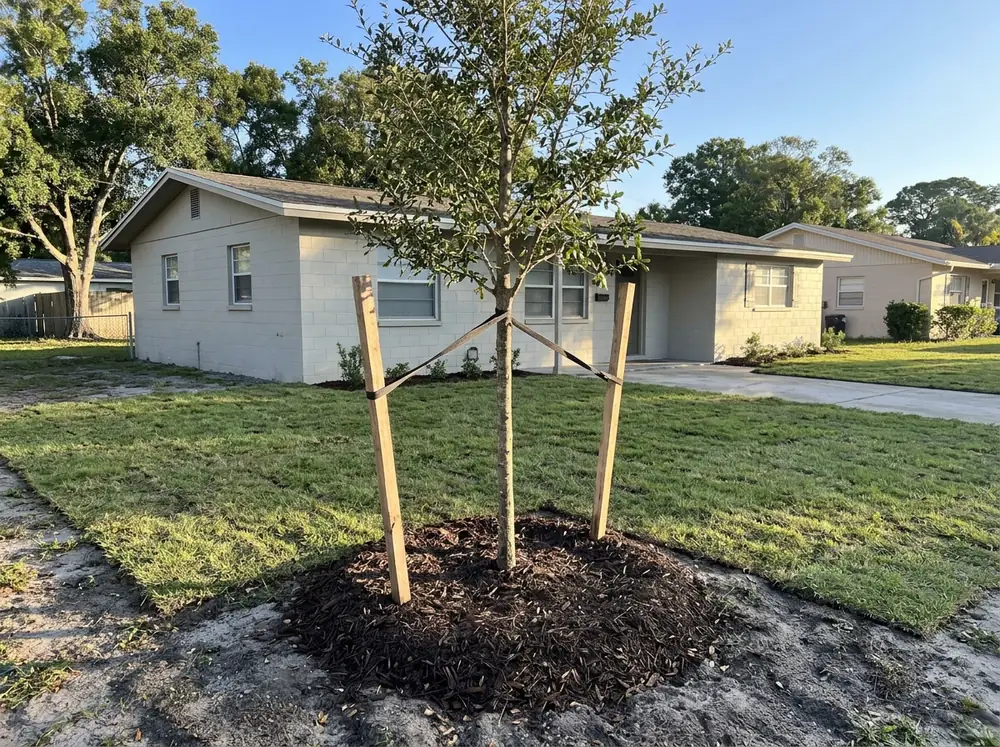
A young oak that grows several equal trunks becomes a weak oak later. The job is to pick one leader, shorten the stems that compete with it, and remove branches that join at a narrow angle. Done early, the cuts are small.
- Pruning cycle: every year for the first five years, then every three years until about age 30 (UF/IFAS)
- Up to about 25% of the live foliage can come off a young tree in one visit
Why Palm Coast homeowners, HOAs and property managers call Palm Coast Tree Service
- Each request goes to just one tree company
- Free to use; you pay only for work you sign off on
- Ask for an estimate that lists cleanup and hauling
- Ask to see liability and workers' comp proof
What to Put in an Oak Trimming Estimate
UF/IFAS advises writing down how much live foliage comes off, from which part of the crown, and the size of branches to be cut, so that you and the climber expect the same result. For clearance work, write the distance too: how far back from the roof or how high over the drive.
Foliage share
A percentage per tree, kept within the limits above.Cut size
Thinning cuts of 1 to 3 inches; anything bigger should be named branch by branch.Clearance
Feet from the roof, the screen enclosure or the driveway.Debris
Whether the limbs are chipped, hauled or left in a pile.
For the rest of the paperwork, use the hiring checks on our tree removal page, and ask whether an ISA Certified Arborist will be on the job (what the credential means).
When to Trim Oaks in Palm Coast
UF/IFAS gives no single oak season. Its pruning guide says dead, broken and diseased limbs can come off at any time, and that live-branch pruning should be avoided during or just after the spring flush of new growth, when the tree has spent its stored energy. Oak wilt, which can spread through fresh pruning wounds while its insect carriers are active, is mostly found in Texas, according to UF/IFAS. Storm-season timing is covered on hurricane tree trimming.