
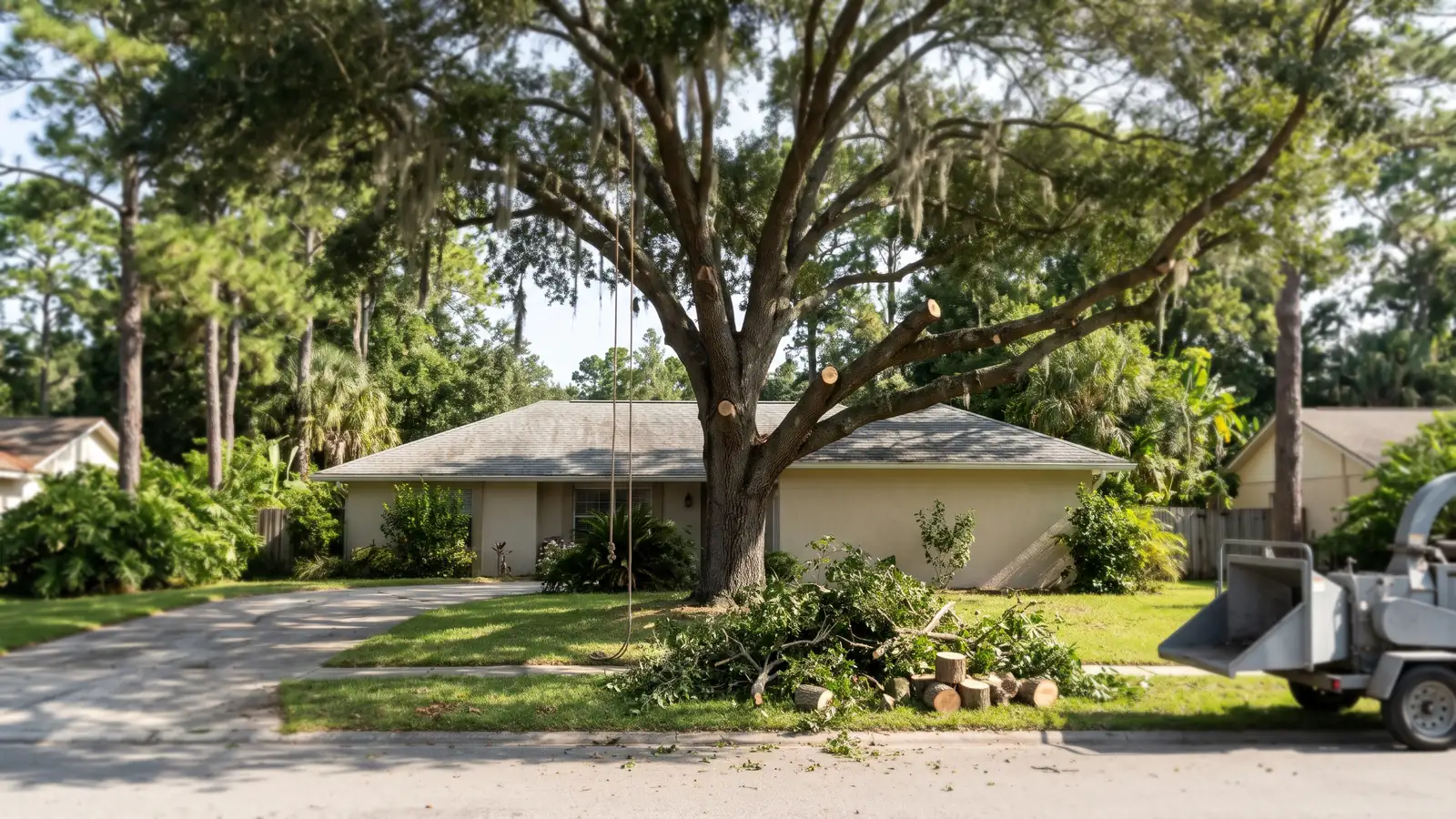
Emergency Tree Removal After a Storm: Five Situations
What a storm leaves behind sets the method and the price. HomeGuide notes that a cleanly fallen tree in open ground usually costs less than a standing one, while a tree resting on a structure or on lines raises the bill.
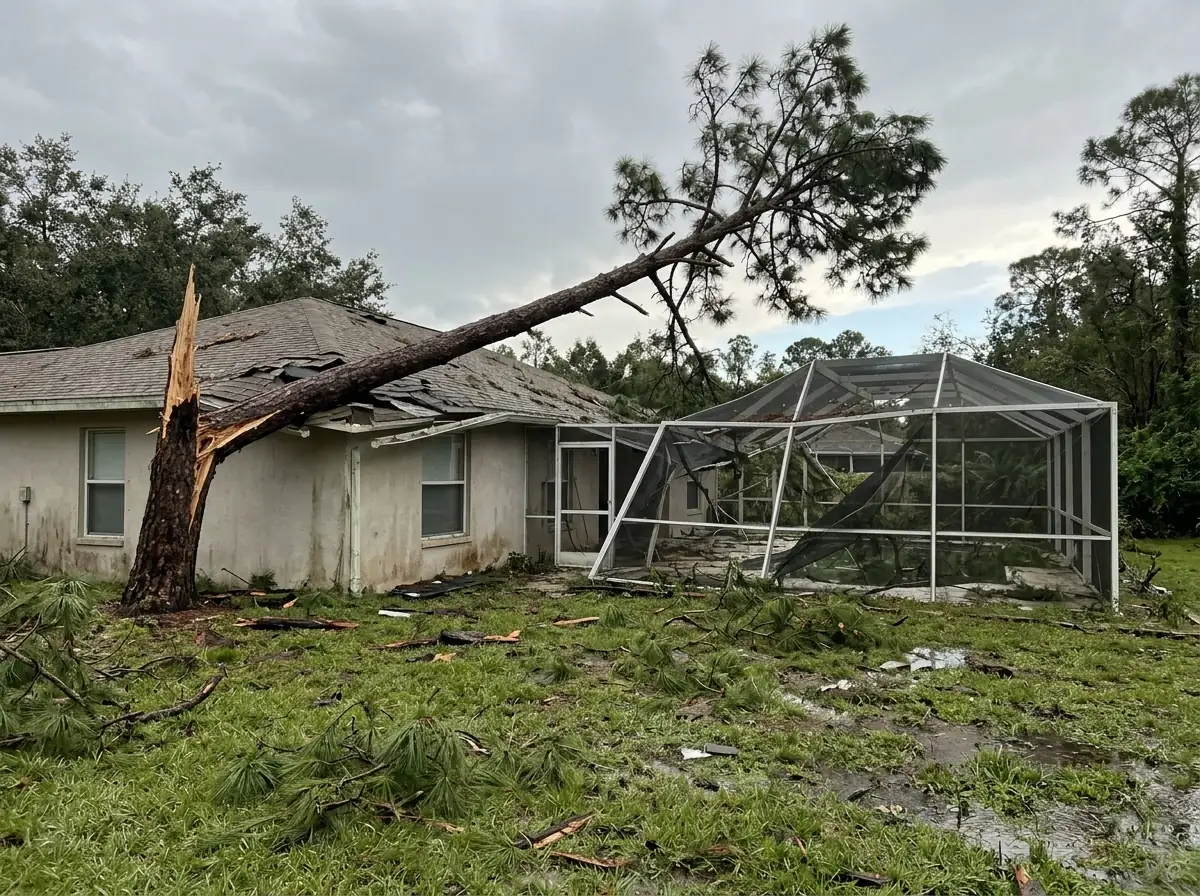
A Tree Resting on the Roof or Pool Cage
This is the costly case: the tree has to be lifted off in pieces without dropping more weight on the roof or the screen. Call the insurer before anyone cuts, and photograph the tree, the damage and the spot where the tree stood. Fixr says many policies pay to remove a tree that falls on the home or another covered structure, subject to the policy's limit and deductible.
- Emergency removal: $450 to $5,000 (Fixr)
- Insurance coverage typically $500 to $1,000 per tree when it hits a covered structure (HomeGuide)
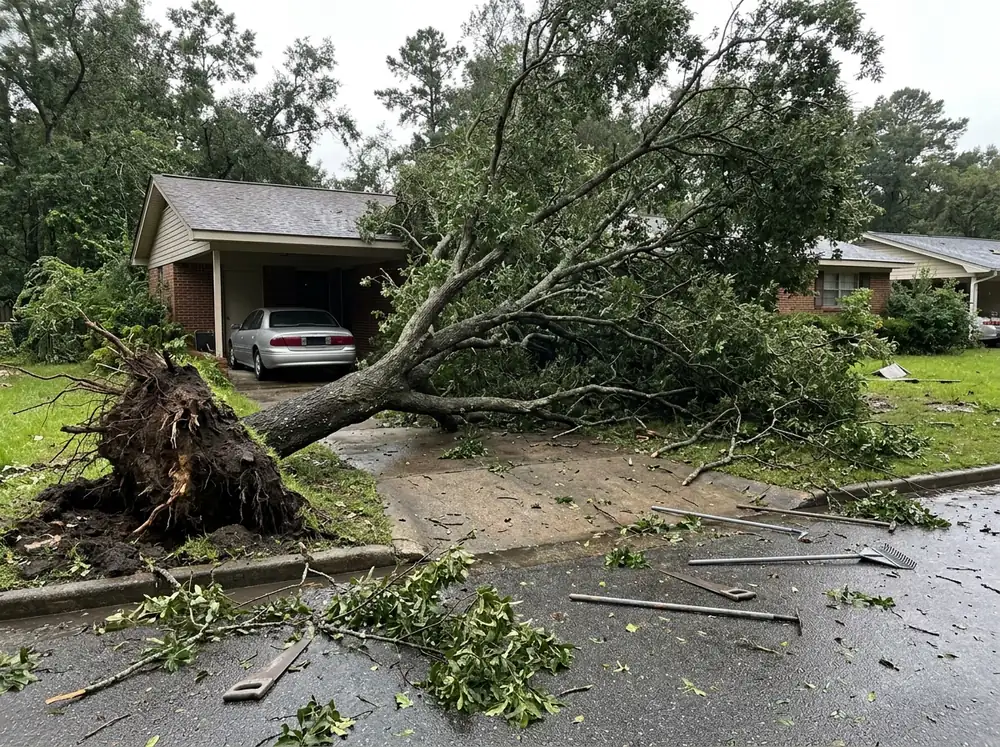
A Trunk Blocking the Driveway or Street
A tree across your own driveway is a cut-and-haul job. Angi explains the low price: with no climbing or careful cutting left to do, the work is mostly chopping or mulching the tree before it's hauled. One that grew on City land, such as along the street, is different: the City asks property owners to open a Palm Coast Connect ticket so an inspector can decide how it comes out. Leaving the cut wood for collection follows the City's storm debris rules, covered on the tree debris removal page.
- Fallen tree, no climbing needed: $75 to $150 to clear (Fixr, Angi)
- Fixr: stump removal and pruning on a fallen tree are charged on top
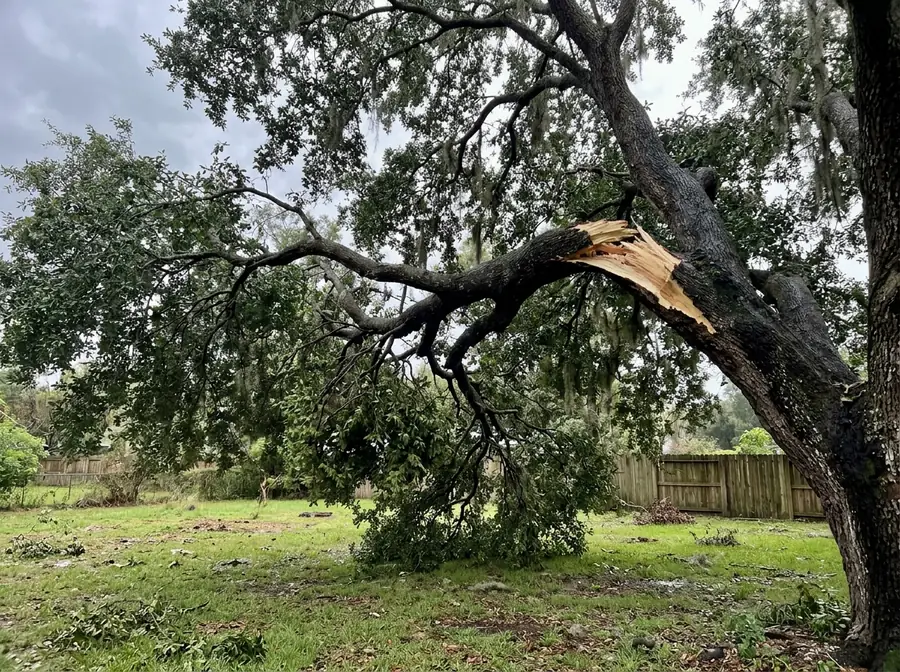
Broken Limbs Caught in the Canopy
A snapped limb caught in the branches above a yard can drop without warning. Keep people and pets out from under it until it's down. Taking down a hung limb is climbing and rigging work rather than a full removal, and Fixr puts the emergency surcharge on trimming at $50 to $200 or more.
- Fixr: emergency trimming surcharge $50 to $200 or more
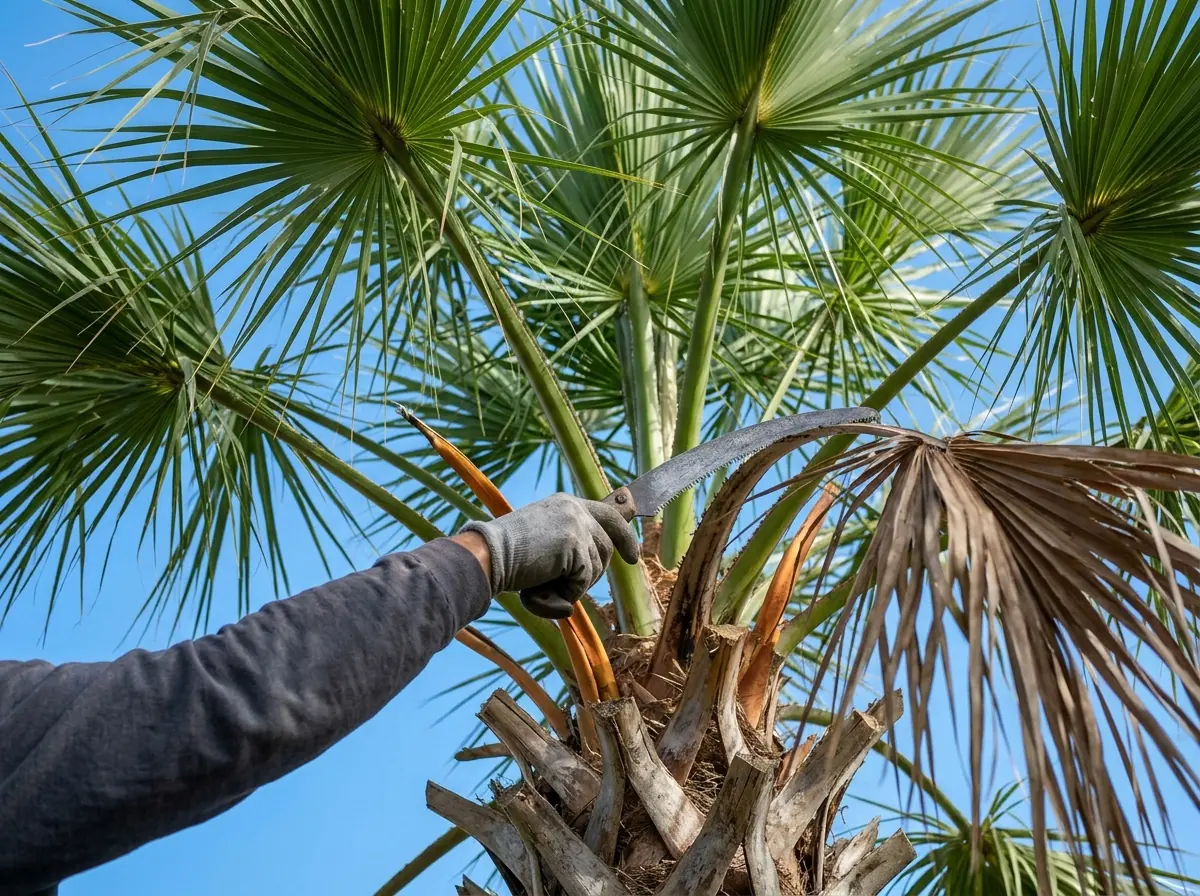
- HomeGuide: emergency palm work $150 to $250 an hour on weekends or after hours
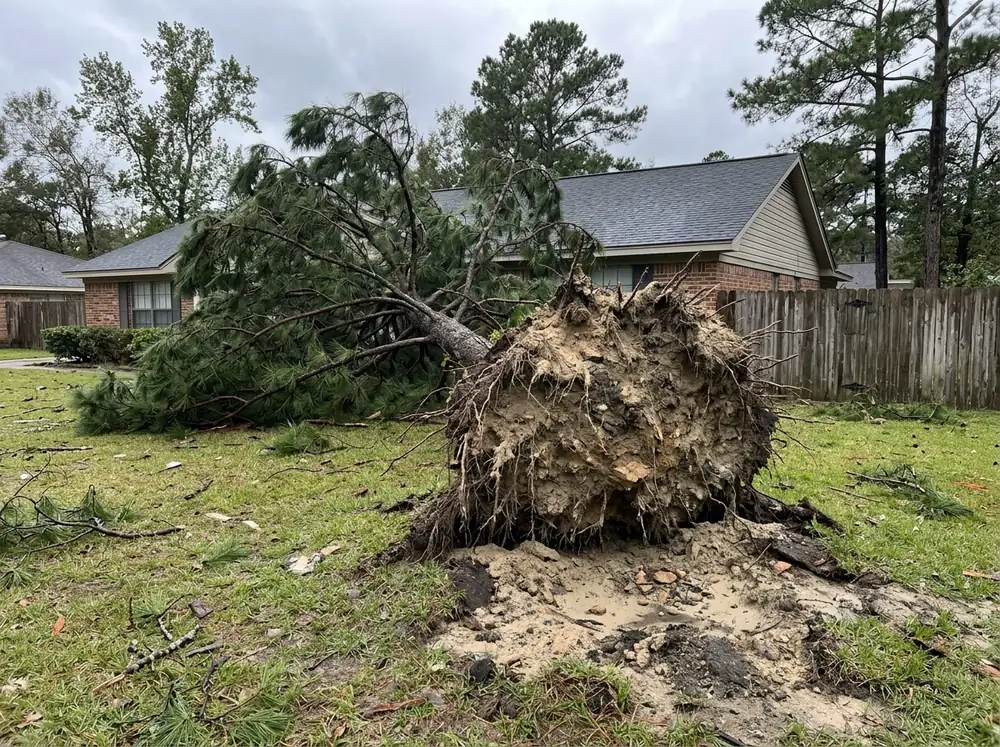
Trees Pulled Over at the Roots
A tree tipped out of the ground with its root plate standing on edge leaves a crater as well as a trunk. Fixr says uprooted trees are often an easier removal because part of the work is done, though the rest of the roots still have to be cut and everything hauled away. A tree that is only leaning after a storm is a different decision; see tree risk assessment before anyone cuts.
- Uprooted or fallen tree: $300 to $500 including hauling (Fixr)
- Root plate and hole repair: ask whether grinding and backfill are in the price; see stump grinding
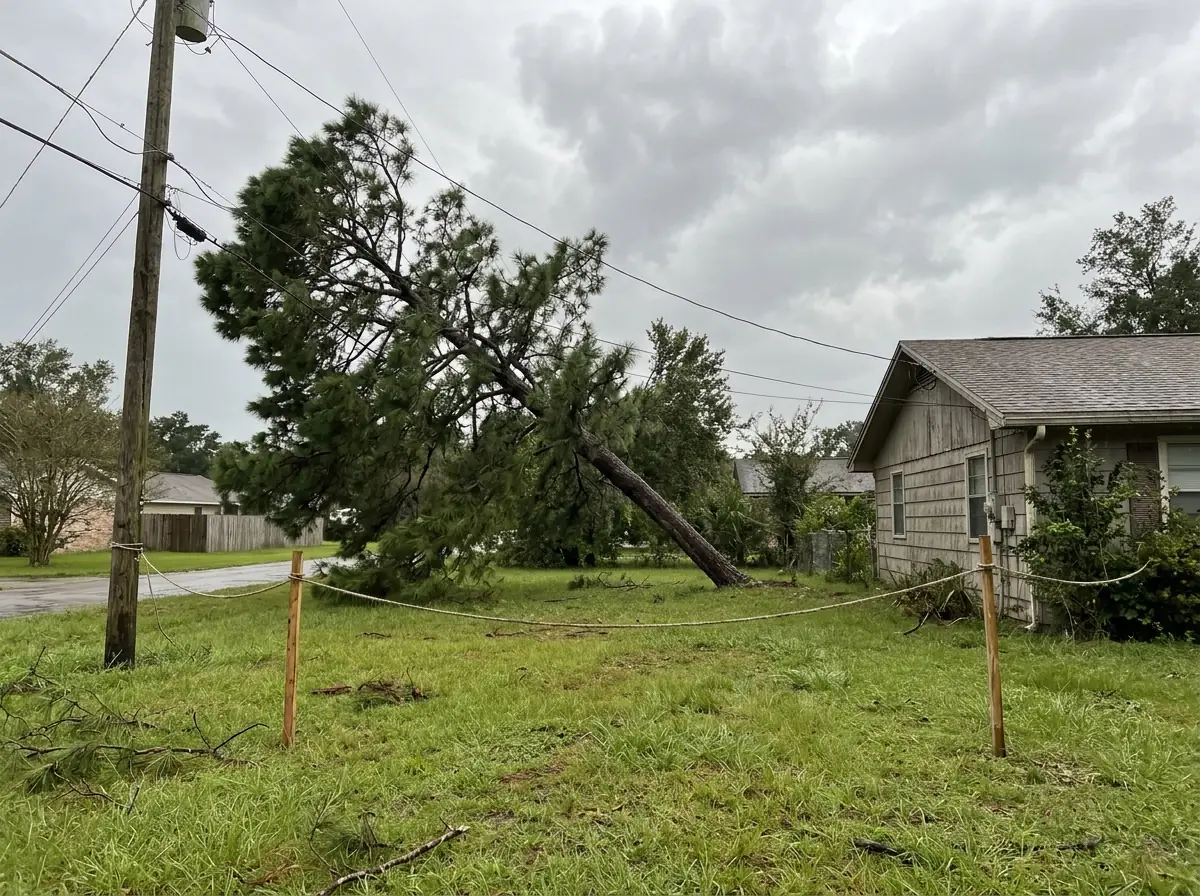
A Tree on Wires
Stay well away from any tree touching a line, and don't cut it or let anyone without line-clearance training near it. Only specially trained line-clearing professionals should work around power lines; the rules are on the tree trimming near power lines page. HomeGuide notes that a tree down on lines adds emergency and repair costs.
Why Palm Coast homeowners, HOAs and property managers call Palm Coast Tree Service
- Each request goes to just one tree company
- Free to use; you pay only for work you sign off on
- Ask for an estimate that lists cleanup and hauling
- Ask to see liability and workers' comp proof
Whose Tree Is It? Palm Coast's Fallen-Tree Rules
After Hurricane Ian, the City of Palm Coast set out who handles a fallen tree. The rules turn on where the tree grew, not where it landed.
Your tree, your lot
A tree that grew on private property and fell on that same property is the owner's to remove.City tree on your lot
If it grew on City property, submit a ticket through Palm Coast Connect for an inspection to determine the removal process.A neighbor's tree
A tree from one developed lot that falls onto the next is a civil issue for the two owners to settle, and may become an insurance claim if it did damage.Any downed tree
Call Customer Service at 386-986-2360 or submit a case on Palm Coast Connect, and the City will inspect the tree.A risky tree on a vacant lot
That has its own inspection and notice process, explained on the dead tree removal page.
Insurance Before the Saw Comes Out
The City's advice when a tree hits a house is to contact your insurer first, then report the damage so the City can track storm damage across the community. Angi adds a practical warning: an insurer may require an agent to assess the damage before it approves a claim, and clearing the tree early can remove the evidence an adjuster needs.
Photos first
Take pictures of the tree, the damage and the stump before anything is moved.Paperwork
Angi suggests asking the tree company what documentation your insurer needs. Get a written estimate either way; the full hiring checklist is on the tree removal page.